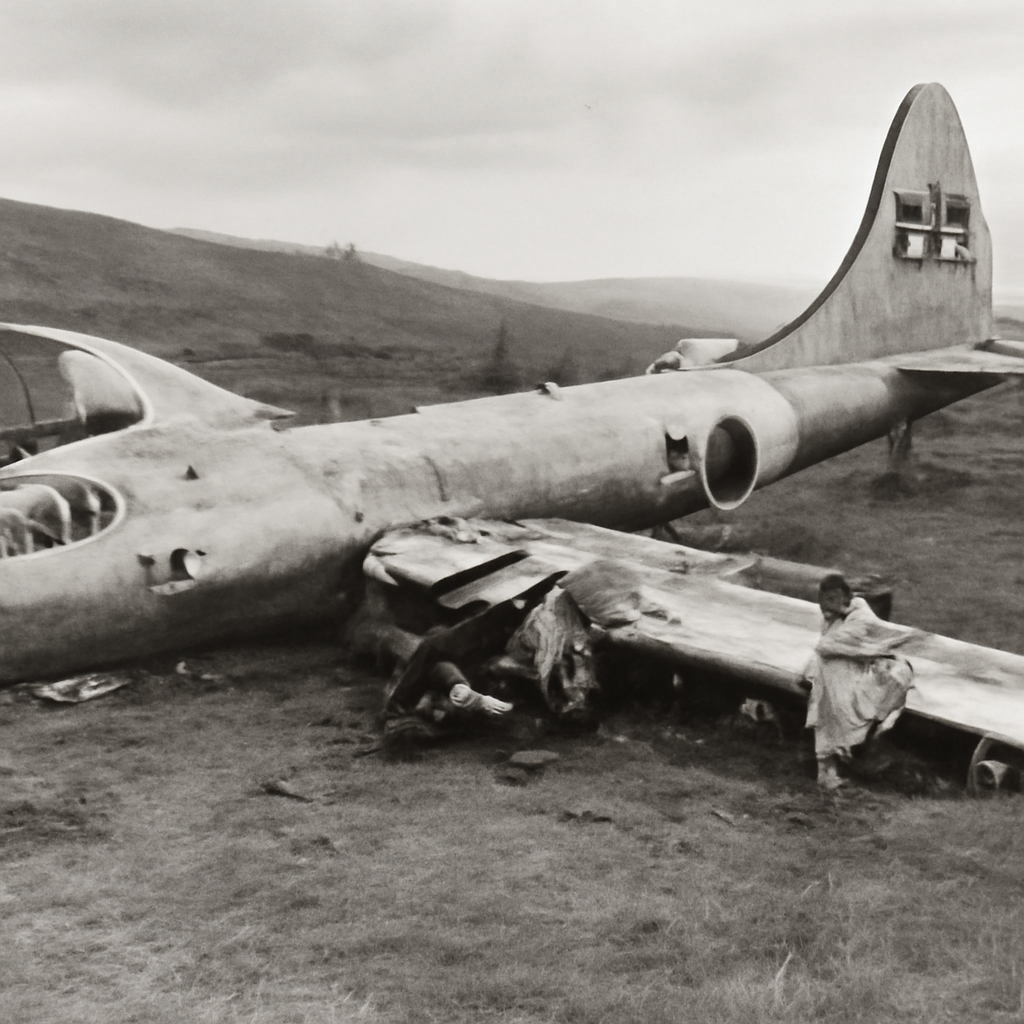

In October and November of 2026, I traveled to the island of Yap located in the eastern Pacific. While there, I investigated an old Japanese airfield from the Second World War that had been bombed by the United States during the conflict. After the war, the jungle reclaimed the area, enveloping the abandoned wrecks of Japanese aircraft.
Adjacent to the dilapidated Japanese airfield is the operational Yap International Airport. In 1980, a Boeing 727 from Continental Airlines (operating as Air Micronesia) crashed during its landing approach as Flight 614. Although the wreckage caught fire, all passengers survived the incident. The aircraft came to rest near a Mitsubishi G4M ‘Betty’ bomber located at the former Japanese airfield.
Over the years, the forest has flourished, allowing visitors to witness the remnants of both a Japanese WWII bomber and a Continental Boeing 727 lying side by side in the jungle, an unusual pairing. Local volunteer pilot Amos Collins guided me to the two wrecks that I had been unable to locate on my own.
Yap: Neutralized & Bypassed By The US Navy
Currently, Yap is part of the independent nation known as the Federated States of Micronesia. During the Second World War, it was under Japanese control as part of the League of Nations South Seas Mandate, territories that Japan had taken from Germany after World War I.
The island of Chuuk (Truk) became a significant Japanese naval base, while other islands were heavily fortified to defend the Japanese homeland. Yap, however, was only lightly defended due to its location far from the main island chains in the Pacific, and it wasn’t until later in the war that Japan rushed to strengthen its defenses on the island.
Across Yap, remnants of Japanese WWII aircraft, artillery, and bunkers can be discovered. I dedicated several days to searching for and examining these sites. A contemporary report from the United States Navy indicates that in May 1944, the Japanese commander of the 22nd Air Flotilla at Chuuk ordered the 2nd Attack Force and other air units to be stationed on Yap.
Subsequent US military reconnaissance missions reported 24 Japanese fighter planes, six dive bombers, two medium bombers, and six night fighters present on Yap. These aircraft participated in counterattacks against US operations targeting the Mariana Islands, including Guam. The US Navy initially devised a plan to invade Yap, similar to other islands, but ultimately decided to abandon this strategy in favor of bombing, neutralizing, and bypassing the island.
The Japanese Mitsubishi G4M ‘Betty’ Bomber
Today, visitors can observe the remains of numerous Japanese military aircraft that were destroyed on the airfield, surrounded by large bomb craters. Some wrecks are marked, while others lack signage or have had their signs removed over time. It is important to note that this area is private property, and visitors should seek permission from local residents before exploring.
I discovered approximately seven Japanese aircraft, or what was left of them. Scattered throughout the island, visitors can also find remnants of US Vought F4U Corsair fighter planes and B-24 bomber propellers that crashed on the island. I primarily encountered Corsair engines and B-24 propellers.
Among the most striking wrecks is that of a Mitsubishi G4M medium bomber/torpedo bomber. Japan produced a total of 2,435 of these twin-engine, seven-crew bombers. This wreck is likely one of the two medium bombers identified by US reconnaissance.
The wreck can be located on Google Maps, about a third of the way down the airstrip, which now serves as a potholed village road. It is the only Japanese wreck on the island that features its own dedicated information plaque. Unfortunately, the plaque is so overrun with algae that it is difficult to read. Most informational plaques on the island pertain to US military remains.
The Crashed Continental Boeing 727 Airliner
Continental Airlines played a significant role in establishing the infrastructure necessary for scheduled air services to the Micronesian islands, which were then administered by the United States under the Trust Territory of the Pacific Islands. Essentially, the US took control of the Japanese S…
Source: Original article