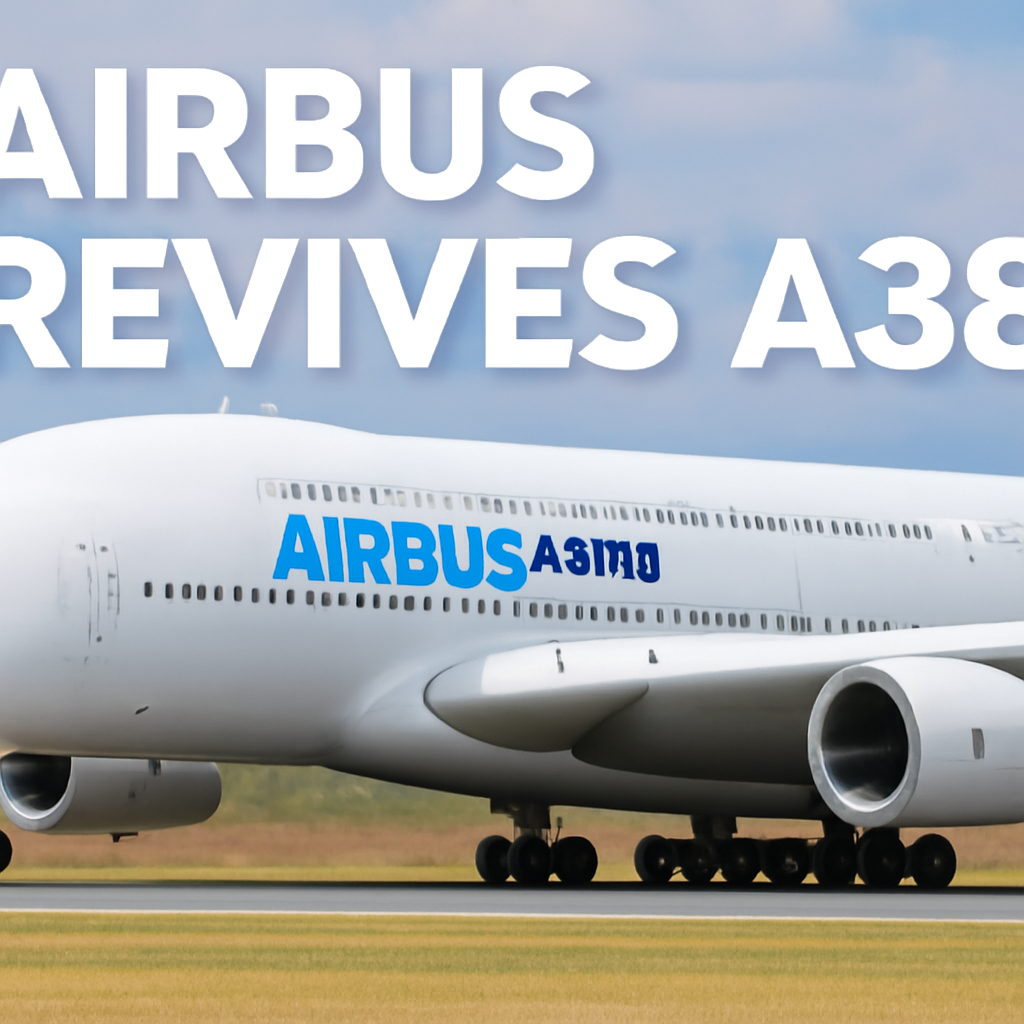

On September 21, Airbus revealed its plan to invest $200 million (£150 million) in repurposing its old A380 wing manufacturing facility to assist with the backlog in A321neo assembly lines. The revamped plant in Broughton is expected to create 480 new jobs in the UK later this year.
This expansion will increase the total workforce in the local area to nearly 6,500. The enhanced infrastructure will turn the North Wales site into a significant component of the A321neo supply chain, which currently has an order backlog of approximately 5,700 units.
Airbus Reinvests in UK Aerospace
The European aerospace giant refers to the updated facility as its new ‘Home of Wings.’ Once the transformation is complete, Airbus plans to equip the former A380 Superjumbo site with six wing production jigs, an equipping line, and a paint shop dedicated to its popular narrowbody model. The company asserts that the assembly line will incorporate ergonomics and technology developed in partnership with the employees who operate the equipment on the factory floor.
According to Airbus, the first wing is already in progress at the newly reimagined Broughton plant. Company executives emphasized the significance of this investment in achieving their target of delivering 75 jets per month worldwide. All jigs on the premises are expected to reach full production capacity by the end of 2026. Additionally, Airbus is increasing A220 wing production in a simultaneous expansion at its Belfast facility in Northern Ireland, further enhancing its industrial capabilities in the UK.
Jerome Blandin, Head of Airbus Wing, stated in the company’s press release on Monday announcing the decision: “We aren’t just discussing a ramp-up; we’re establishing the infrastructure to support it. Currently, an A320 Family aircraft takes off or lands every two seconds globally, with wings designed and manufactured in the UK.”
The Unquenchable Demand for Airbus’ A321neo Worldwide
The A321neo represents approximately 70% to 75% of the entire backlog, making it the clear commercial favorite that drives nearly all of the company’s narrowbody sales demand. The immense demand for the A321neo, especially its long-range variants like the A321LR and the newly certified A321XLR, is significantly heightened by Boeing’s historical product gap.
Boeing has never produced a direct, clean-sheet successor to the legendary, out-of-production Boeing 757. Consequently, Airbus has predominantly captured this middle-of-the-market segment. The A321neo effectively acts as the modern replacement for the 757, providing transatlantic widebody range with the economical operating costs of a single-aisle jetliner.
The investment in infrastructure at Broughton positions Airbus for record-setting output. However, the company is still dealing with a significant global aerospace supply chain crisis, primarily caused by a shortage of engines from American manufacturer Pratt & Whitney. Airbus CEO Guillaume Faury acknowledged that engine delays have hindered optimal production schedules, necessitating a postponement of the full ‘Rate 75’ target to 2027.
UK Industry Fueling Airbus Production
In terms of value to UK businesses, ADS Advance reported that Airbus allocated over $4.5 billion in contracts to nearly 2,000 different suppliers in 2025. More than 40% of these companies are recognized as experts in their respective technical fields.
Airbus has indicated that it has invested over $2 billion in enhancing and expanding its operations in the UK. The company claims that its comprehensive industrial logistics have generated 14,000 direct jobs across the nation. Broughton serves as the global center of excellence for wing manufacturing, while Filton, England, hosts one of the largest aerospace engineering offices in Europe.
Additionally, Belfast is another key wing manufacturing hub and one of the largest contributors to the Airbus wing supply chain. Airbus also operates the Wing Development Center in Bristol, which is focused on developing next-generation technology to enhance performance.
Source: Original article