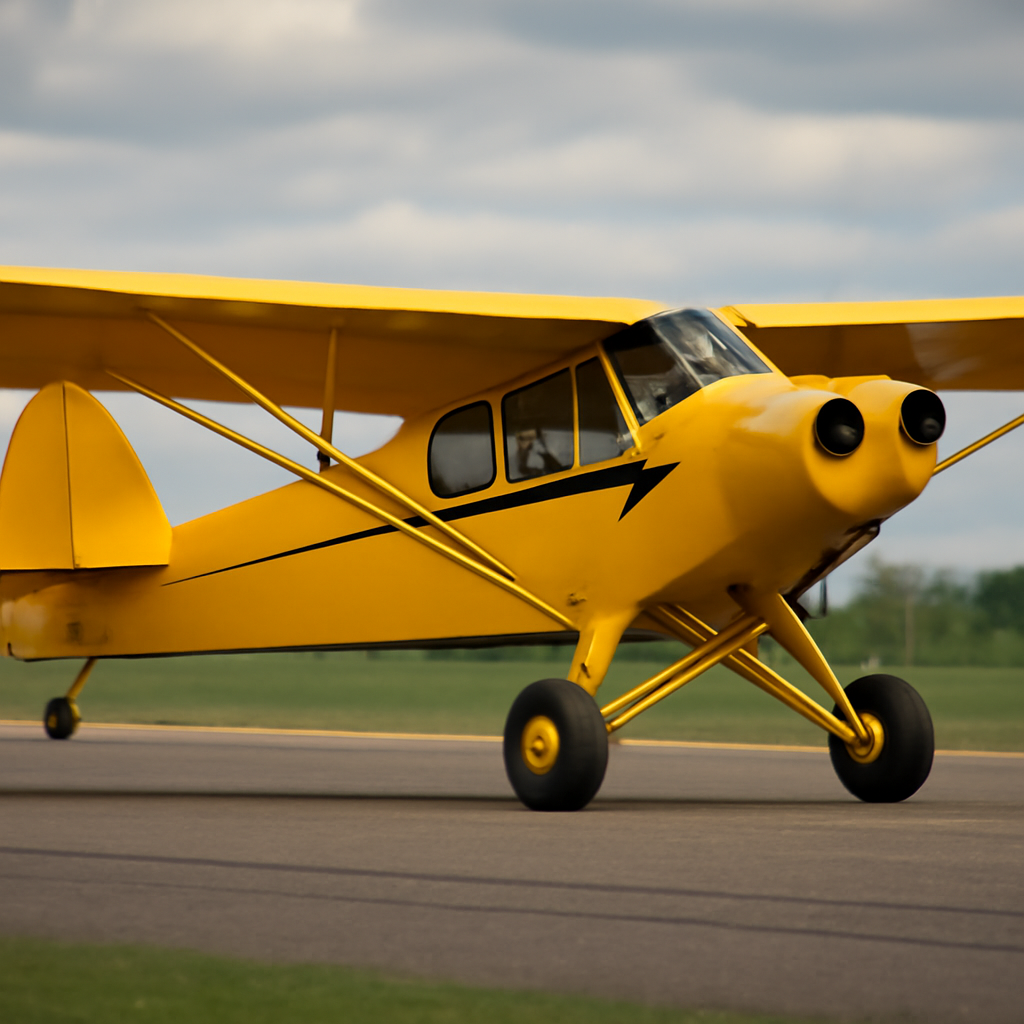

It is believed that among the over 400,000 American pilots who served in WWII, four out of five experienced their initial flight in a Piper J-3 Cub. Historical studies suggest that 75% of these pilots completed their training in this same spruce-and-fabric taildragger. This small yellow aircraft became a symbol for the many new aviators who first learned stick-and-rudder techniques from its cockpit. Although the WWII era solidified the Cub’s legendary status, its history began well before the conflict.
The J-3 was the inaugural model from the newly formed Piper Aircraft Corporation, introduced in 1938. The affordable Cub gained popularity through the government-sponsored civilian pilot training program, which prepared college students for flying. As the US government recognized that conflict was unavoidable, significant funding was allocated to the assembly line. At the height of wartime production, Piper was able to produce a finished Cub every 20 minutes, designated as the L-4 Grasshopper.
In addition to training, these aircraft were utilized for coastal patrols in reconnaissance roles and played a crucial part in US Army initiatives such as the Tuskegee Airmen and the WASP ferry service operated by women. By the time production ceased in 1947, approximately 19,000 to 20,000 units had been delivered. The Cub contributed to the emergence of the ‘golden era of air travel,’ and while it is no longer in production, a few examples continue to fly around the globe.
Why The Cub Made A Forgiving Teacher
The Pentagon selected the Cub during its time of need due to its forgiving flight characteristics and low construction costs. The reputation it established in the CPTP instilled confidence in lawmakers that this small taildragger could effectively prepare the greatest generation for an unprecedented aerial battle worldwide. The Department of Defense relied on the Cub to train nearly every new pilot for the largest Air Force ever assembled in history.
Examining the engineering of the aircraft, Air & Space Magazine notes that the Cub’s large wings and lightweight design made it feel akin to a powered glider, capable of landing at speeds below 40 mph (64 km/h). This allowed students to make errors without causing significant damage. The power came from small piston engines rated between 40 to 90 horsepower (30 to 67 kW), depending on the model, as mentioned in the same article. In contrast, the Stearman, the military’s standard primary trainer, had an engine exceeding 200 horsepower (149 kW) and weighed nearly a ton when empty. Tuskegee Airman Roscoe Brown recalled that its narrow landing gear required careful handling to prevent a ground loop, which is a sudden swing during landing that can harm the aircraft.
The Army Air Corps initially ordered the type as the O-59 in 1941 for liaison and observation tasks, according to the National Museum of the US Air Force, later renaming it the L-4. It states that Piper’s J-3 trainer was predominantly painted olive drab to convert it into an L-4. This simplicity benefited the Army, allowing them to procure a proven aircraft with a large pool of pilots already familiar with its controls.
The 65-horsepower Continental engine was remarkably efficient, consuming only about 4 to 5 gallons of fuel per hour. This efficiency enabled flight schools to maintain continuous training operations at a fraction of the cost compared to heavier military trainers. The easy availability of parts and airframes ensured that the government never had to worry about training programs being delayed due to aircraft shortages.
Washington Becomes Piper’s Biggest Buyer
On December 27, 1938, President Franklin Roosevelt announced the CPTP, promising training for 20,000 college students annually, according to the Centennial of Flight Commission. A small trial commenced in early 1939, and Plane & Pilot reports that the full program began that autumn. The government funded each student’s 72 hours of ground school and 35 to 50 hours of flight time.
A federal regulation also mandated that every participating flight school must possess one airplane for every 10 students. This requirement transformed
Source: Original article