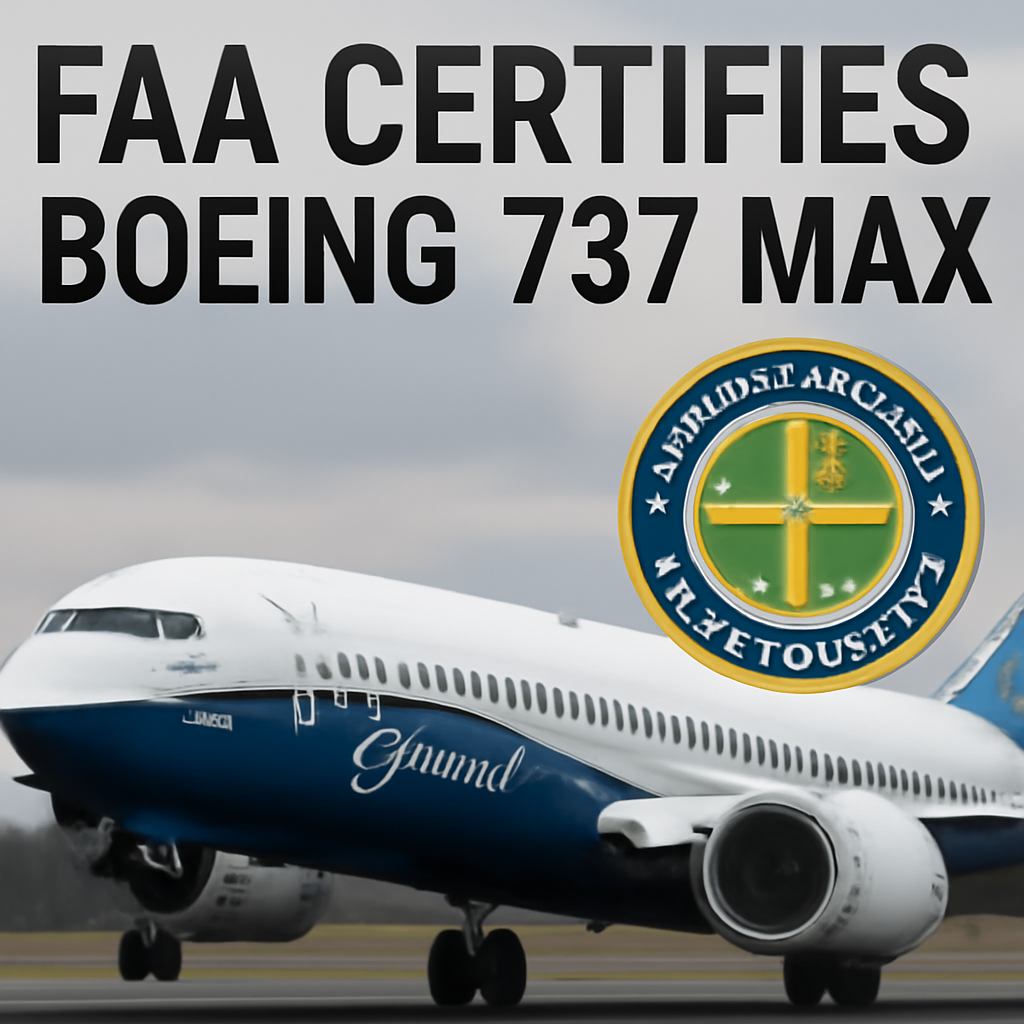

On the first day of the Farnborough Airshow, Reuters interviewed Chris Rocheleau, the Deputy Administrator of the Federal Aviation Administration (FAA), regarding the anticipated certification of Boeing’s single-aisle 737 MAX 7, MAX 10, and widebody 777X. He mentioned that the agency is looking forward to certifying all three models in the near future.
FAA Administrator Bryan Bedford also shared with Reuters that the FAA has increased the resources dedicated to the Boeing aircraft by 35% to 40% after collaborating with the manufacturer to prioritize tasks. He suggested that the MAX 7 is expected to be the first to undergo final evaluation before production begins, with the other two models following closely behind.
Boeing is Gaining Traction
The primary obstacle preventing the 737 MAX 7 from entering production has been the engine anti-ice system. While the company has been working on an engineering solution, Boeing has also constructed 30 complete aircraft that are currently in storage, awaiting delivery. The anti-ice issue affects all variants of the 737 MAX, but the next eight and the MAX 9, which are already operational, are receiving waivers until a retrofit can be implemented. The 737 MAX 10 also needs this fix prior to certification, along with an upgraded angle of attack system before the FAA will approve it.
Regarding the long-awaited next-generation widebody 777X, the FAA has not provided a specific timeline, but Rocheleau indicated that the FAA is following Boeing’s lead to establish the schedule. Due to its complexity and disruptions in Boeing’s operations, the 777X is more than five years behind schedule, yet it features a range of innovative technologies developed from the 787 Dreamliner and others that have not been seen before. As the largest twin-engine jet ever constructed, it boasts industry-first folding wingtips and the most powerful turbofan engines ever used in a commercial aircraft.
Rocheleau was quoted by Reuters saying, ‘Closer than ever before. I think the -7 is literally around the corner, and -10 right behind it. Whether it’s this year or early next year… we’re kind of letting Boeing drive that when they bring us the right information and we work through it together.’
The FAA Returns Control
Bedford previously explained to Reuters last week that much of the delay, if not all, regarding the extended certification of the three eagerly awaited jetliners is due to frequently changing engineering priorities on Boeing’s part. He noted that since the company has stabilized its technical focus, the FAA has been able to assist them more efficiently.
This update follows the recent announcement that Boeing will be permitted to resume issuing its own individual airworthiness certifications for 737 MAX and 787 Dreamliner airframes. This is a significant sign of progress following the 737 MAX tragedies and the 20-month global grounding of the fleet, which also resulted in the loss of this authority during the FAA investigations.
The Race to Meet Customer Demand
Returning airworthiness certification to the manufacturer has also relieved the FAA workforce, allowing more personnel to focus on the certification process. A recent indication of increased momentum was the 777X achieving a significant milestone by surpassing the 50% mark for FAA Type Inspection Authorization flight testing. Rocheleau pointed out that the widebody flagship will only receive certification after both narrowbody MAX models complete their evaluations, targeting late 2026 or early 2027.
Until recently, Boeing’s narrowbody production rate was at 42 aircraft per month, but the FAA has recently approved an increase to 47, with plans to further raise that number to 53 deliveries per month once the MAX 7 and MAX 10 are certified. The ongoing certification delays for the three jets still awaiting final approval represent some of the most costly backlogs in aviation history. Collectively, these three programs are facing a bottleneck of over 1,600 delayed aircraft orders worth billions.
Source: Original article